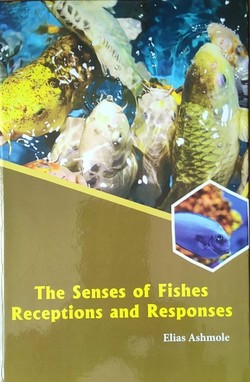
The Senses of Fishes
Receptions and Responses
BY
Elias Ashmole
INTRODUCTION
Understanding how fishes perceive their world has fascinated me for years. These creatures, occupying a vast range of aquatic environments—from deep oceans to shallow streams—rely on complex and often finely tuned sensory systems to survive, communicate, and thrive. This book grew from a desire to explore those systems not only as biological functions but as windows into the lives and experiences of fishes.
The senses of fishes differ in significant ways from those of terrestrial animals. While vision and hearing are important, other senses like the lateral line system, electroreception, and chemoreception play roles that are often overlooked or misunderstood.
This book is not a comprehensive catalog of every known fish sense, nor is it an exhaustive summary of all species. Instead, I focused on representative examples that illustrate key principles of sensory biology, always anchoring them in the behavior and ecology of the species themselves. The approach is both functional and comparative, reflecting the diversity of fish taxa while highlighting evolutionary patterns and adaptive significance
Scientific discovery in this area continues to advance, and what we know today may be refined tomorrow. Yet the fundamental truths remain: fishes sense their world in ways that challenge our assumptions and expand our understanding of animal perception. Writing this book has deepened my appreciation of their complexity, and I hope it encourages readers to see fishes not as primitive or alien, but as sophisticated beings navigating their world through extraordinary sensory lenses.
In compiling this book, my aim has been clarity, curiosity, and respect for the subject. The senses of fishes, like the fishes themselves, deserve nothing less.
Contents
<!--[endif]-->Introduction to Fish Sensory Systems*
Overview of Fish Sensory Modalities
Evolutionary Development of Sensory Organs
Functional Significance in Aquatic Environments
Comparative Anatomy of Fish Sensory Systems
Vision in Fish*
Anatomy of Fish Eyes
Retinal Structure and Function
Color Vision and Photoreception
Adaptations to Low-Light Environments
Polarized Light Sensitivity
Olfactory and Taste*
Structure of Olfactory Organs
Mechanisms of Odor Detection
Role in Foraging and Mate Selection
Taste Bud Distribution and Function
Chemical Communication in Fish
Hearing and Sound Localization*
Anatomy of Fish Auditory Systems
Mechanisms of Sound Detection
Bone Conduction vs. Swim Bladder Mechanisms.
Sound Localization and Directional Hearing.
The Lateral Line System*
Structure and Function of the Lateral Line
Detection of Water Movements and Vibrations
Role in Schooling Behavior
Predator and Prey Detection.
Electroreception*
Discovery and Historical Background
Anatomy of Electroreceptor Organs.
Mechanisms of Electric Field Detection
Ecological Roles of Electroreception.
Mechanoreception*
Types of Mechanoreceptors in Fish
Detection of Pressure and Flow Changes
Role in Orientation and Balance.
Integration with Other Sensory Modalities.
Sensory Integration and Neural Processing*
Central Nervous System Involvement
Integration of Multisensory Inputs
Neural Pathways and Synaptic Processing
Plasticity and Learning in Sensory Systems
Comparative Neuroanatomy
Sensory Adaptations in Extreme Environments*
Deep-Sea Fish Sensory Adaptations
Cave-Dwelling Fish and Sensory Loss
High-Altitude and Cold-Water Adaptations
Adaptations to Polluted or Hypoxic Waters
***for more please visit the library***

